
Online Ethics & Compliance Training
Online Ethics & Compliance Training
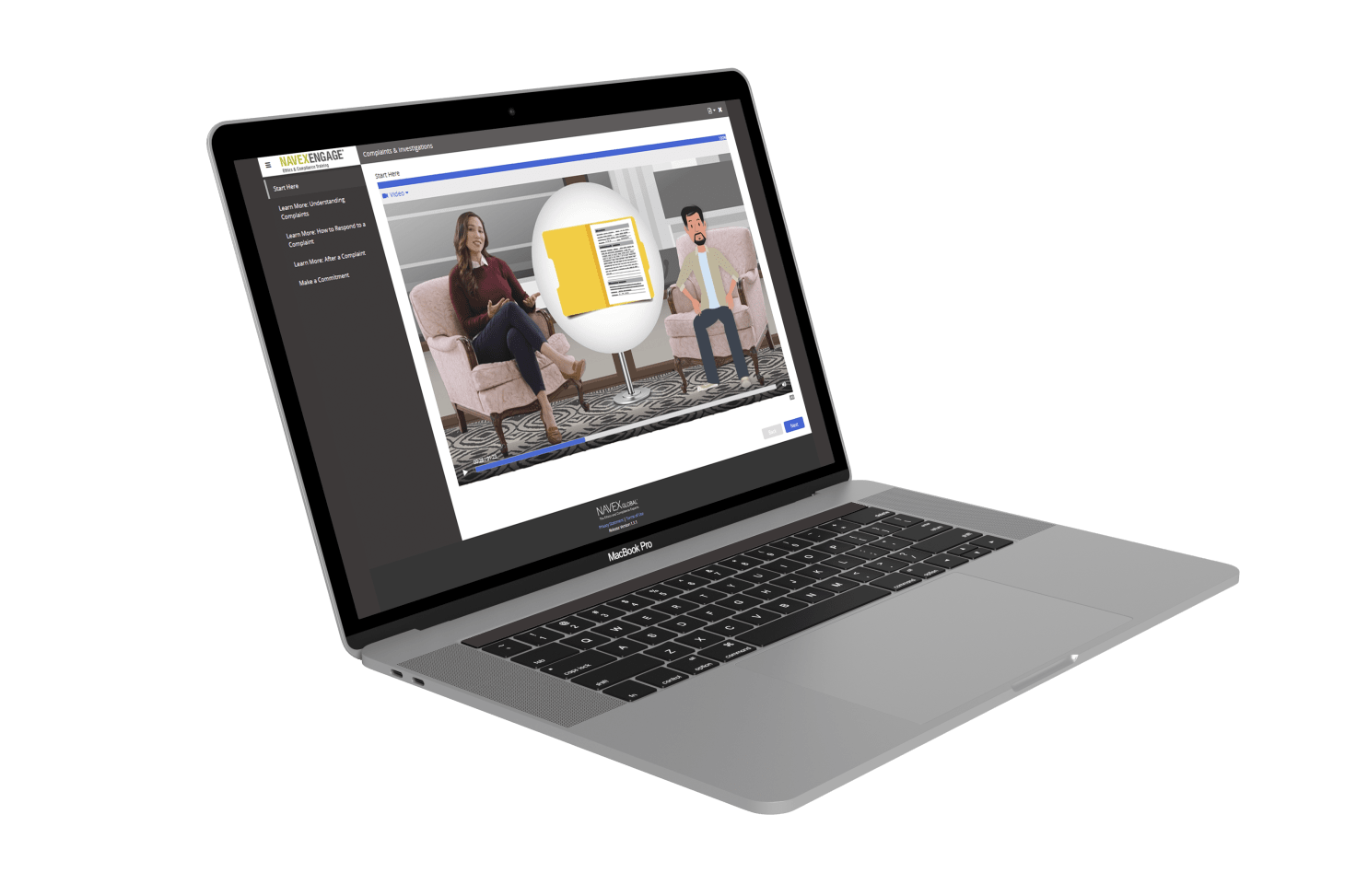
Effective ethics & compliance training programs should satisfy federal and state training mandates and improve your organization’s culture. NAVEXEngage, NAVEX’s online ethics and compliance training solution, provides legally vetted and topical content that helps you with compliance and employee adoption.

Legally-vetted course content addresses compliance, conduct, employment law and information security risks

Designed to withstand courtroom scrutiny and meet the demands of federal and local training mandates

Training courses can be taken anywhere, anytime on desktop and mobile devices

Easily reflect your organization’s critical processes, values and brand with the course customization application

Employees can access all their compliance tasks in a custom dashboard

Adaptive Learning courses aligned with 508/WCAG2.1AA/EU Dir accessibility standards

NAVEX’s Adaptive Learning courses adapt the content to the individual learner based on their performance throughout the training. This rewards learners who demonstrate proficiency by quickly progressing them through the content, saving time and reducing training fatigue.
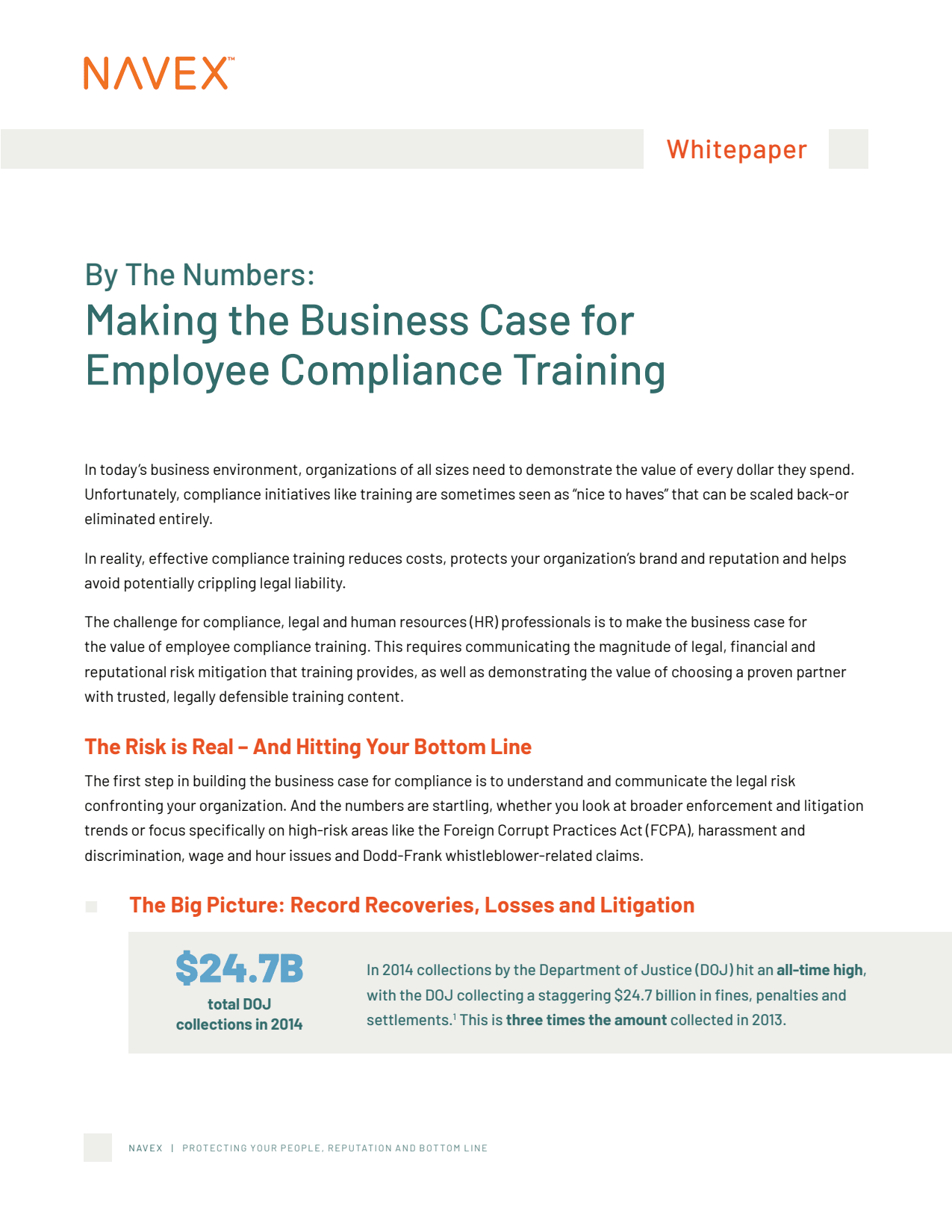
Use our Getting Started toolkit to build your Online Ethics & Compliance Training program.
NAVEX was able to develop a product that addressed the changing culture in many environments. It mirrors very nicely the environments we operate in today and plan to operate in tomorrow.
Angel Del Valle, Director of Talent Development
Learn more
Learn more